What's the BEST Way to Package Homemade Dehydrated Backpacking Meals?
For years I put my homemade dehydrated backpacking meals in various types of plastic bags, with mixed results. Most of the time it worked. But too many times I had holes in the bags or melted bags. This meant I had a mess and needed to get creative for dinner. But now, I’m using something different that works better.
I’ve tried a few things
If you’re new here, you wouldn’t know that I make my own dehydrated backpacking meals. And I’ve tried a few ways of packaging those meals so that mealtime is easy and fuss-free on trail.
I’ve tried freezer bags. They usually handle hot water surprisingly well. But too many times, especially with ingredients that have pointy or sharp pieces, the bags can puncher easily. I’ve often unknowingly had holes in the bags. And when I poured hot water into the bag, of course, it leaked. It leaked all over me or the ground or my gear. This is exactly what we don’t need, not just because it’s a mess, but because the leaked food now on clothes, gear, and soaked in the ground. This tends to attract animals.
I’ve also needed to be very careful so I didn’t get the bag too close to the flame on my stove, a hot pot, or mistakenly pore boiling water into them. These bags can handle hot water if there’s enough food to absorb and disperse the heat, which brings down the temperature.
But sometimes the water is too hot or it’s poured directly on the plastic before it hits the food. Or maybe the food doesn’t absorb the heat fast enough. Any of these, or a combination of these, can result in a melted bag and sometimes a mess. The trick is to not pour boiling water into the bag. Let it cool a bit first. This usually works. But it can fail with weaker bags.
I’ve also had bags that didn’t seal properly and leaked that way.
I needed to be super careful when using freezer bags. But after a long, hard day on trail, my energy level and attention to detail takes a hit, and I’m not always as careful as I need to be.
I also tried extra thick reusable quart size bags. This is great for reducing trash because I can take them home, wash them out, and reuse them next time.
Of course, with these I need to carry the empty bags the entire trip. They don’t weight much and that I am creating less trash made me feel like the extra carry was worth it. But although they are extra thick, I still had the same problems as I did with freezer bags. “Extra thick”, it turns out, doesn’t mean they can handle heat any better. I still had puncher holes too. So, these bags were a bit disappointing.
Food Safety
A word about food safety. With dehydrated food, there is a greater risk of food spoilage after a couple weeks if you don’t seal and store your food properly. “Dehydrated” means there’s less moisture in the food. It doesn’t mean the moisture content is zero. Freeze dried is better at getting the moisture content closer to zero.
Certainly the risk is higher with plastic freezer bags or reusable sandwich bags because they are not as air-tight as we think they are and the moisture level will never be zero. Even a small amount of moisture and light working with oxygen can spoil food, sometimes quickly depending on the conditions. So, we need to consider the science here is making our food safe while on trail.
The answer... So far
What options, then, do we have?
Recently I found food-grade Mylar bags. These are commonly found at the grocery store as retail food containers, and you’ll even see them used with many types of prepackaged backpacking meals.
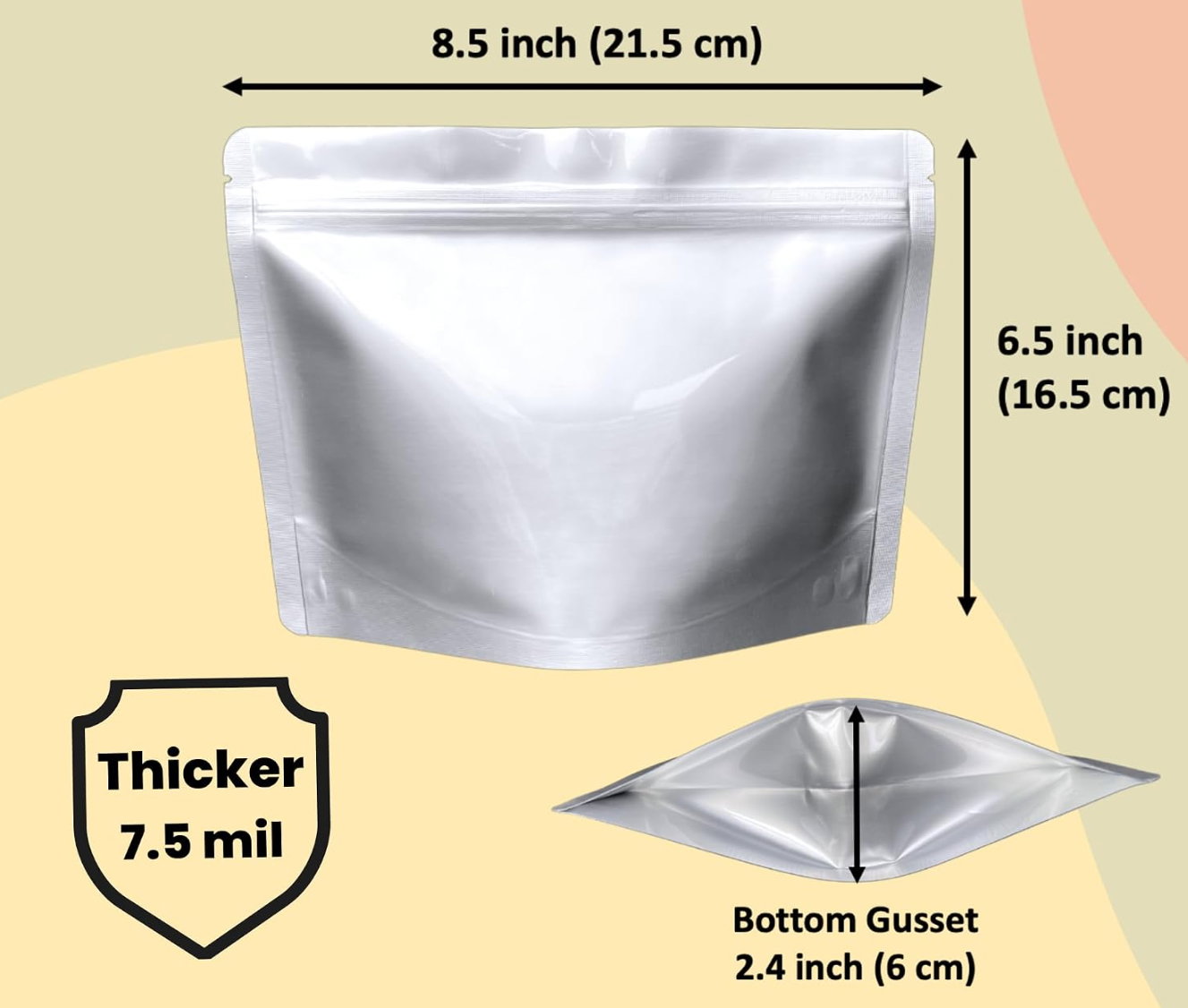
I worked with Mylar when I was in the military for things other than food storage. I remember it being super tough, very difficult to tear. That kind of toughness piqued my interest in using these for packaging my dehydrated meals.
But, what exactly is Mylar? It’s a multi-layered material:
- An outer layer of made of a type of polyester (plastic) called “BoPET”. I won’t go into the details here, except to say that it’s a very thin film that provides high tensile strength and puncture resistance.
- In the middle is a core layer of thin aluminum foil that is bonded to the outer layer. This is the barrier layer that prevents the bag from receiving oxygen, light, and moisture.
- The inner layer is the only layer that comes in contact with your food. It is made of a food-safe polymer that is heat-sealable. Sealed properly, this provides an airtight barrier that also prevents any potential interaction with the other two layers.
In using Mylar bags we have a material that has high tensile strength to prevent punctures, protects against oxygen, light and moisture, is food-safe, and can be sealed air-tight.
With all three layers together, the bags I’ve been using are 7.5 mils thick. By comparison, a standard freezer bag is maybe 2.5 mils. In this case, thicker actually is better due to the types of material in the layers.
When comparing all the other options I’ve tried:
- The freezer bag and the reusable bags don’t have near the tensile strength of a Mylar bag.
- They are also not heat-sealable, which means the shelf-life of food stored in freezer. bags or reusable bags is weeks instead of years in a sealed Mylar bag.
- They are not smell-proof. Mylar bags are.
- They are less heat resilient then the Mylar bags.
I mentioned Mylar bags can be heat-sealed, which helps extend the shelf life of our meals. To do this we can use a vacuum sealer or an impulse sealer. The difference is that an impulse sealer doesn’t suck the air out of your package before sealing, so it will take up maybe a little more space. I have both type of sealers, but my vacuum sealer doesn’t get hot enough. For these 7.5 mil bags, it needs to get between 375-425 degrees Fahrenheit. My vacuum sealer doesn’t get that hot.
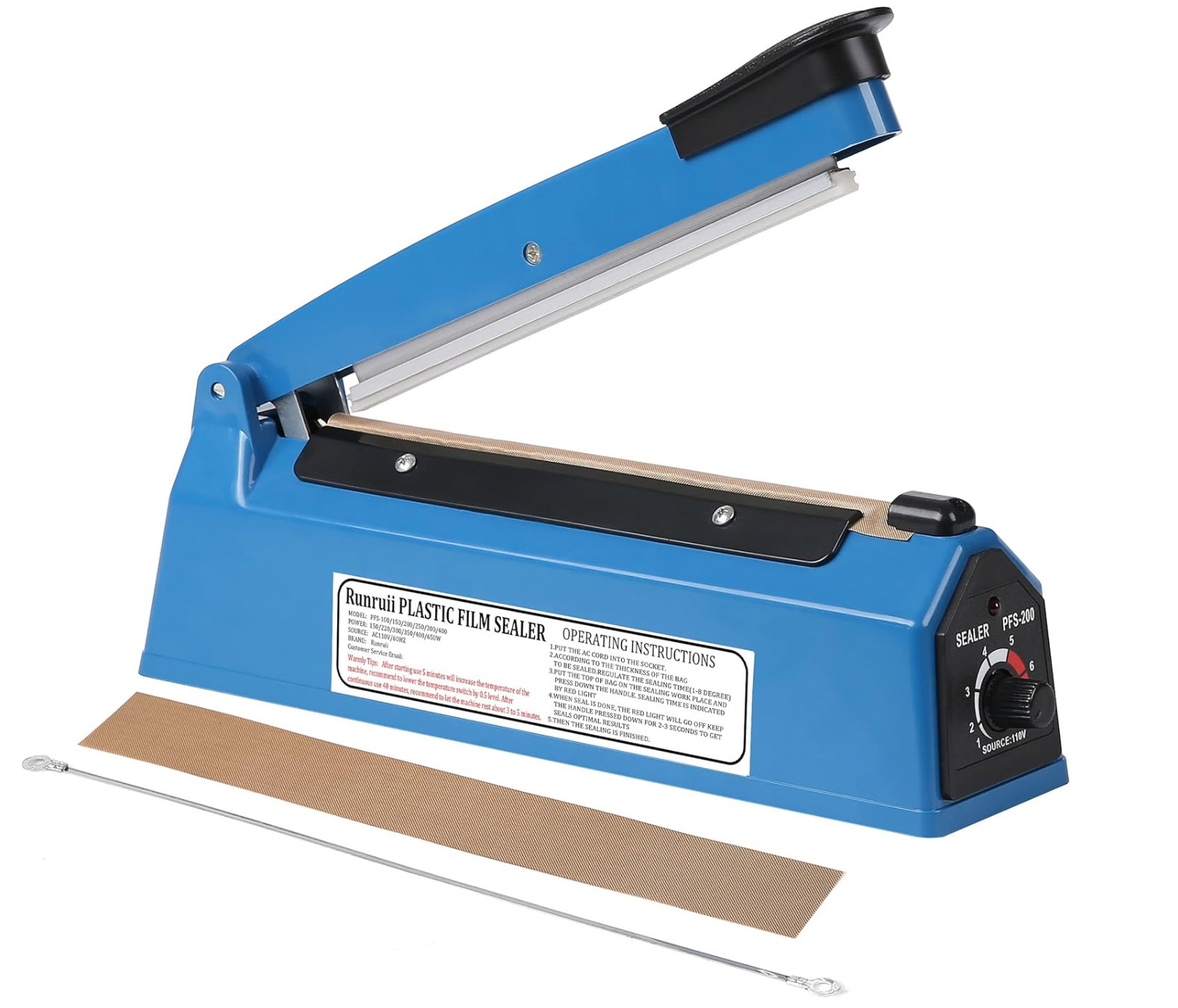
With regard to vacuum sealing; I don’t think it’s a big deal to vacuum seal. The space saved with the vacuum compression is insignificant to me.
I do, however, put an oxygen absorber in the food bag, especially if I won’t be using the meal for a couple months or longer. I also store all my backpacking meals either in my freezer or in my cool basement.
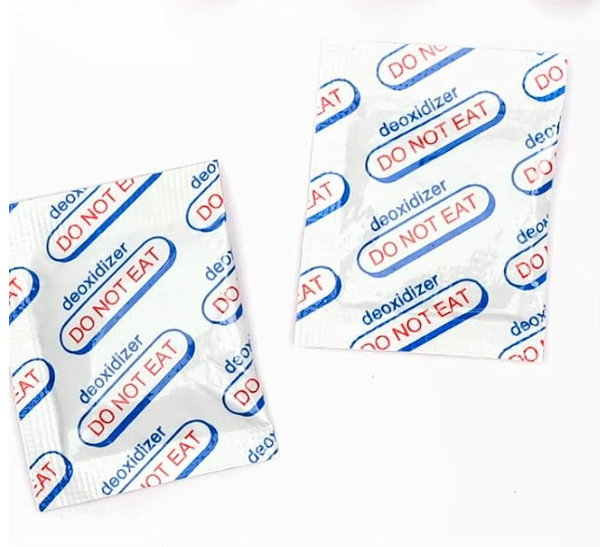
The combination of the heat-seal, oxygen absorber, and storing in a cool place best ensures the longest shelf-life.
And speaking of longer shelf-life. This is where vacuum sealing is better because with less air in the bad, the oxygen absorber will last longer.
These Mylar bags are constructed so they are non-toxic. There’s much deeper information available about this.
The weight of the medium size bag I use is .6 oz. Compared to a standard quart-size freezer bag coming in at around .2 oz, the Mylar bag is obviously heavier. But, I’ll gladly trade a fraction of an ounce if there’s a much greater chance of ensuring my food is safe to eat and my food bag is far less likely to leak or melt.
Mylar, can be recycled; but not all recycling centers will take them because the aluminum coating makes recycling more difficult.
However, if washed and dried thoroughly, they can be reused. You may not be able to re-heat-seal them, however. This isn’t a huge deal as long as you zip seal them and use an oxygen absorber packet. You won’t get an extended shelf life without the heat-seal but you’ll be good for at least the hiking season.
I demonstrate my equipment and process on my YouTube Video.
The Math
Mylar bags are more expensive than common freezer bags. My medium sized bags run about $.54 each if you buy in packs of 50. But if I reuse them, the price quickly becomes a non-issue – especially if I’m creating less trash.
With the setup demonstrated in the video, my total all-in cost for 50 meals: the bags, oxygen absorbers, and the impulse sealer is around $60.
So for the first 50 meals (if you include the cost of the impulse sealer), it’s $1.20 per meal. If you don’t include the impulse sealer, it goes down to half that (64 cents) per meal.
So, bottom line is that, long term, it’s less than a dollar per meal to increase the safety of our food and the shelf-life of our meals by many years with a far less chance of the bag getting punctured or melted.
Conclusion
If you are one to make your own backpacking meals – for whatever reason: to be confident in what you are eating or maybe to save some money – this Mylar option seems to be the best option I’ve found so far.