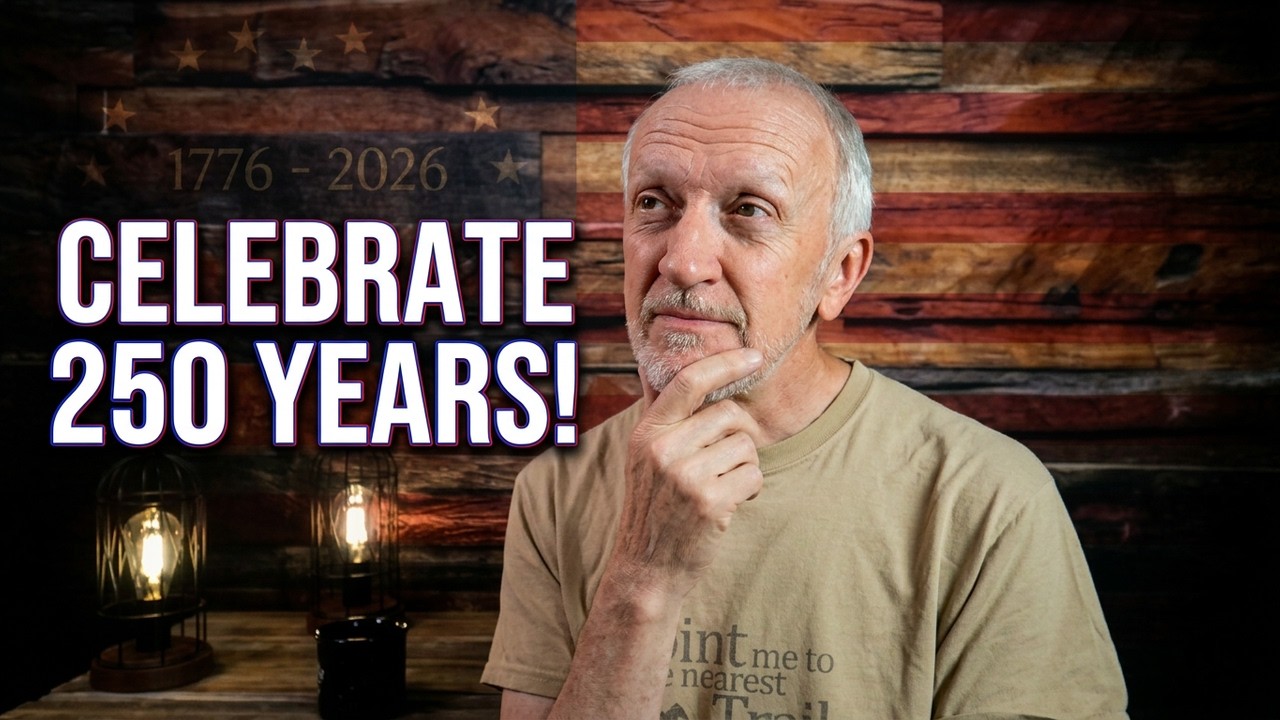
Pause for a minute - we have MUCH to celebrate!
I’m taking a break from my typical trail and gear article to talk about this special day. It is the 250th celebration of America’s Declaration of Independence.
The United States of America is the World’s oldest continuous federal constitutional republic, uninterrupted since the Constitution was ratified and placed in full effect on March 4th 1789.
There are many important dates around the late 1700s that I had forgotten, honestly, until I recently refreshed my memory.
For instance, the military phase of the American Revolution started in April of 1775 with the battles of Lexington and Concord. The war ended with the British surrendering at Yorktown, Virginia in October of 1781. Six and a half years that changed the world.
Note that the American Revolution didn’t start with the signing of the Declaration of Independence. Years earlier, in 1763, at the end of the Seven Years War, often referred to as the French and Indian War, Britain had amassed a large war debt and looked to the colonies for relief by way of new taxes. This gave rise to colonial unrest. But it didn’t stop there. Over the course of the next 12 years more taxes and other punitive laws against the colonies continued to be imposed by the British government.
Taxes and laws. It's standard for just about any place on earth, right? But, here’s the thing. When we are governed by laws and we pay taxes, most people expect to have a say it what is lawful and how much taxes we should pay. That wasn’t the case with the colonists. They were not allowed to have representation in Parliament, nor had they been granted same rights as other British subjects. That’s what tyrannical governments do to subjugate their population. It finally came to a head in 1775 at Lexington and Concord.
A little over a year later, on July 2nd 1776, delegates from the 13 colonies gathered for their Second Continental Congress to proclaim independence from British rule. Then two days later on July 4th the official document that explained and justified the decision for independence was signed and declared to the public. On this day we can talk about independence, freedoms, and liberty – because that was definitely part of it, but, at the core of it all was defiance against tyranny. They weren’t going to tolerate it any more... even to the death. “I know not what course others may take; but as for me, give me liberty or give me death”. That’s how Patrick Henry from Virginia put it, justifying his argument that a militia should be raised against Britain, who was, at the time, amassing troops against the increasingly defiant colonists.
Part of the reason they thought it necessary to explain and justify their decision to the public was that not everyone in the colonies wanted independence from Britain. Only about a third of the population supported the revolution. Another third were loyal to the British Crown. And the rest were neutral; they didn’t actively support either side.
It’s important to note that the decision for independence was not a popular vote kind of thing. This was a decision made by delegates from the 13 colonies. Each colony sent as many delegates as they wanted, regardless of population. But each colony was allocated only one vote in the continental congress. All thirteen colonies, in the end, submitted a yes vote to declare independence, even when only a third of the population wanted that.
Out of this division and representative construct that made the declaration for independence was born a new nation. A new nation that was in turmoil even after victory against Britain.
On a Monday in September, four years after the end of the Revolution, in 1787, the Constitution was adopted. It’s seven articles outlined the framework of the new government, including the separation of powers among the three branches: legislative, executive, and judicial.
The first 10 amendments to the Constitution, known as the Bill of Rights, were ratified four years later in 1791. Seventeen more amendments followed over the years as our nation continued to work toward a more perfect union.
Benjamin Franklin was asked on the final day of the Constitutional Convention what kind of government the delegates had created. He replied, “A republic … if you can keep it.”
The founders knew it was going to be difficult to maintain what they created. They knew that the fight for freedom and liberty wasn’t over. It’s been a long, hard battle for every generation since then. There have been some big challenges and some imperfect times.
None the less. Here we are, the envy of the world. We’re still the nation most desired by those who want something better.
And now it’s on us.
It’s on us to do whatever it takes to keep it strong and prosperous. It’s on us to work to keep it admired and respected.
It’s on us to train up our children to love all that makes this country virtuous AND to encourage them to hold precious the framework that holds it all together.
It’s on us to not lay waste to the past, but rather to honor it with our lives, if necessary. Because that’s the burden that has been carried by those who went before us. And that is the actual cost of freedom and liberty. Soldiers don’t die for their government. They died to maintain a God-given way of life our forefathers created.
As the Declaration of Independence firmly establishes: it’s not the government that gives us our basic and natural rights – life, liberty, and the pursuit of happiness - those are inherent and universal, endowed by our Creator. The governments purpose is to honor and protect those rights and liberties.
Here’s the message for today: no matter what this nation has faced in the past, we, with our founding documents and principles in hand, have found our way through it all. And, doing the same, I am confident that we will hold on to that 250 year old promise for many more years to come.
Do this: pause for a few minutes. Take an inventory of your blessings and ponder the fact that none of it was by accident.
It was all purposely designed by divine appointment. It was written down and memorialize in oak gall ink mixed with iron sulfate, one of the longest lasting non-fading types of ink in the world, and preserved on parchment made from animal skin – not flimsy manufactured paper that falls apart over time.
It’s displayed in the Rotunda for the Charters of Freedom at the National Archives Building in Washington D.C.. It is seen by over a million visitors every year. And the good and desirable lives of millions of Americans, seen by the world every day, can be traced back to what our country’s founders did on this day 250 years ago.
May God continue to bless you and may God continue to bless the United States of America!