Ouachita Trail Hike Gear and Summary
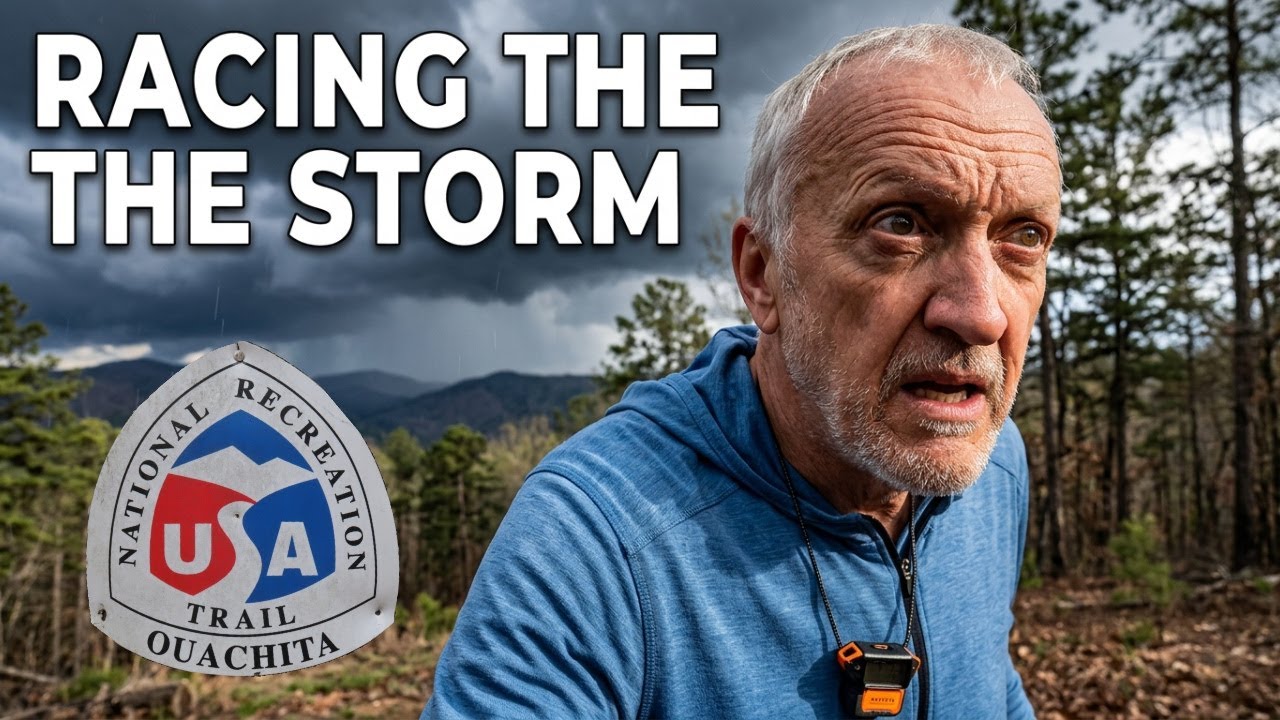
I finished up the Ouachita trail this year. It starts in Talimena State Park in Oklahoma and goes east for 223 miles until reaching the eastern terminus at Pinnacle State Park in Arkansas near Little Rock.
You might know that I began my trek of this trail last fall. I started at Talimena but needed to end the hike at 95 miles in due to some painful trench foot. Five days of soaked feet with very high humidity was not something I had expected.
So, this spring (mid-March) I hiked the remaining 128 miles from Big Brushy Trailhead, where I had stopped several months prior, to the eastern terminus. This wasn’t a true terminus-to-terminus thru hike – but I don’t care much about that. Making smart decisions about getting off trail for critical health or safety reasons is always the better than the alternative.
So, lets’ review a few things.
This is NOT going to be a item by item gear review or mile by mile trail summary. If you want my full gear list – it’s on my gear list page. And if you want a look at my actual trail experience, check out my trail videos. Instead, I’m going to review some things that I think are a respectful use of this time – mine and yours.
Here we go:
Weather and Rain Gear
I scheduled my finish of this trail for the first week of March and was all prepared for wet weather. Of course, I would be after my trench foot experience. I had my waterproof socks, my vapor barrier sock liners. I exchanged my rain jacket and umbrella for a poncho. I brought a new tarp because the old one had some worn spots and could leak. I was more ready for the rain this time.
I was also more closely watching the weather. They were calling for a “high risk of heavy precipitation” for about half my planned trail days. I don’t mind a little rain – but to put myself at high risk of doing a repeat of last fall seemed senseless. To drive anther 14 hours, arrange and pay for a shuttle, and go through all the required planning, knowing that there was a high probability of being forced off trail again due to weather conditions was probably not the smartest move.
So, I postponed it for a week. This proved to be a better deal. It turned out I didn’t need ANY rain gear. I didn’t even need my tarp for my hammock setup. It only lightly rained for maybe 10 minutes the whole time I was out there. And during that time I was in a shelter.
That’s how it goes sometimes. But regardless, it is better to be prepared and not need the few, very light extra gear items than it is to not be prepared and suffer through some awful conditions.
Clothing Layers
The temperatures at night ranged from 33 to 57 degrees F. So, I’m glad I brought my typical 15 degree quilt and 10 degree underquilt. This may be overkill for some. But I sleep cold. On warmer nights I slept only partly covered.
Besides my light hoodie shirt and the pants I normally wear, for layers, I brought a long sleeve merino wool T-shirt and my Patagonia nano-puffy. I also brought a light neck gaiter, my knitted hat, and my waterproof work gloves. This layering was the perfect combination for me for these temperature variations.
Battery Banks
I brought 2 battery banks. My solar panel wasn’t going to do well with the tree cover on this trail, so I left that behind. I had my 20Kmah Nitecore and my 10Kmah Anker.
My thinking behind bringing both was that, with my older-model Garmin tracking on, I would need to charge more often. But, I kept my electronics with me under my quilt at night. Warmer batteries will not discharge as fast. It turned out that I would have been fine with just my Nitecore. I don’t think the 10Kmah Anker would have been enough.
Every other day both my phone and Garmin were down to around 40%. I had 4 extra camera batteries and I didn’t need to charge my headlamp or watch while on trail.
Hammock-Trekking Pole Options
I had to think through my trekking pole and hammock pole options. The options were
- to use my carbon fiber hammock poles and use my LT5 Gossamer Gear trekking poles – with each of these having one purpose each. There is virtually no risk with this option and it weighs 15.7 oz.
- to take my Cascade Mountain Tech trekking poles and use them as trekking poles and hammock poles. This option weights 14.3 oz. BUT, if I snap a tip on either of my trekking poles, I’m sleeping on the ground without any ground insulation. AND this is a rocky trail, which increases the chances of snapping a tip off my trekking poles. I’ve done that a few times.
I figured it worth the extra 1.4 ounce carry since it eliminates the risk of sleeping on the cold ground. So, that’s what I did.
Kitchen Setup
My kitchen setup is worth a mention here. I carried my alcohol stove this time. The reason is that I wanted to try a different breakfast/early day nutrition option – which did not require me to use my stove in the morning – which means less fuel and less weight if I took my alcohol stove.
For this whole 9 days on trail I only used only 9 oz of alcohol fuel with a very light titanium stove and pot from Evernew.
My breakfast was a powdered mix. It was a package of Carnation Instant Breakfast packet, half of a RecPak, and a single-serving packet of instant coffee. I shook this up with about 750ml of water, which worked great with my wide-mouth Mazama bottle. I drank this with one of my homemade breakfast bars – some at camp before I left and the rest over the first few miles on the trail. This worked out great. It kept my energy up all morning. And it tasted good.
This is not something I would do on a hike with shorter distances per day. But on a longer hike it saves me about a half hour every morning. I’m normally chilly in the morning, so getting up and moving instead of sitting around eating breakfast gets me warmer faster and it gives me more time to stop throughout my day for site seeing or just smelling the roses.
The feeling of being rushed to meet daily goals can cause of overuse injuries and makes the trail less enjoyable. So, this might be something for you to consider if you are a goal-minded hiker.
Waterproof Socks
I wore my Noord waterproof socks on my nero day, going into Mountain Thyme. I wanted to see how hot they made my feet and how they felt. It was my first time wearing them on trail.
They feel different, but not in a bad way. I could tell there was a waterproof membrane in them. But it wasn’t uncomfortable. They didn’t cause any hot spots or blisters. I didn’t wear a liner sock with them.
The reason I wanted to test them in this way is that I expect there will be days when I would put these socks on expecting rain but when rain doesn’t actually come, when my feet won’t get wet. I wanted to know if I could wear these in dry conditions.
And it turned out fine. I put about 11 miles on them without any problems. So, I can say now that they would be fine wearing them for at least a half day without getting wet.
Strange enough, I’m actually looking forward to the day I can test them in raining and wet conditions.
Trail Conditions
This trail is very rocky on the western side and progressively gets less rocky as you hike east. There are still rocky sections and plenty of opportunity to turn an ankle throughout the trail – but the east side is better.
The climbs also get progressively shorter and total daily elevation gains get smaller as you go east.
Of course, this means you could plan bigger miles more safely on the east end. I recommend that hikers lessen their miles per day on the west end, just to have a safer hike, to give more time to navigate and avoid injury.
There are more and more dangerous road crossings on the east end. Some of them are near blind curves and some of them have shoulder-less bridge crossings. So, be super careful and don’t expect drivers to respect the “yield to pedestrian” rules. One car came very close to me on a bridge. It could have been very tragic.
Tips on when to hike this trail
You’ll read that summer is a bad time to hike this trail. True. It’s hot, humid, ticks, mosquitoes, chiggers. Summer is not a good time to hike this trail.
I did my first attempt at this trail in mid-October. I got trench foot and had to get off trail. This would have probably been a whole different story if I had waited a couple weeks. Do yourself a favor if you want to hike in the fall: wait until after the first couple of hard freezes AND after the trail crews are finished with their trail maintenance. You may want to contact the Friends of the Ouachita Trail for their maintenance schedule.
Most of my feet problems were caused by trail overgrowth retaining rain water. It wasn’t that it was raining the whole time, it was that the overgrowth was thick and full of rain water from the rain on previous days.
The spring, overall, was better. But on the down side, although there was no overgrowth, there was a lot of leaves on the forest floor, which covered many of the rocks. So, in some places every step was a question mark. And if you go after it starts warming up into the 70s and 80s, you’ll probably start getting ticks and other bugs. I only had one tick.
I also looked at the average rainfall per month in Arkansas. April and November historically have the highest rainfall at 4.8 and 4.6 inches, with about 50 inches per year.
By comparison Colorado has around 17 inches per year with only May and July getting over 2 inches. Those numbers can be significantly higher at higher elevations, however.
But regardless of the actual conditions for any given time of year, I am not accustomed to the kind of rain they get in Arkansas. So, if you are from a low-precipitation kind of place – just be aware that you’ll need to prepare for a wetness of which you may not be accustomed.
Conclusion
I absolutely enjoyed the Ouachita Trail. It gave me the solitude I normally seek on a long trail; it was challenging enough; the forests were inviting; it wasn't a good distance for me; it had wonderful vistas for this area of the country; the support and the people that care for this trail and its hikers were wonderful.
If this sounds good for the way you want to live like you want it, you should get out there!