Kuvik Titanium Wood Stove
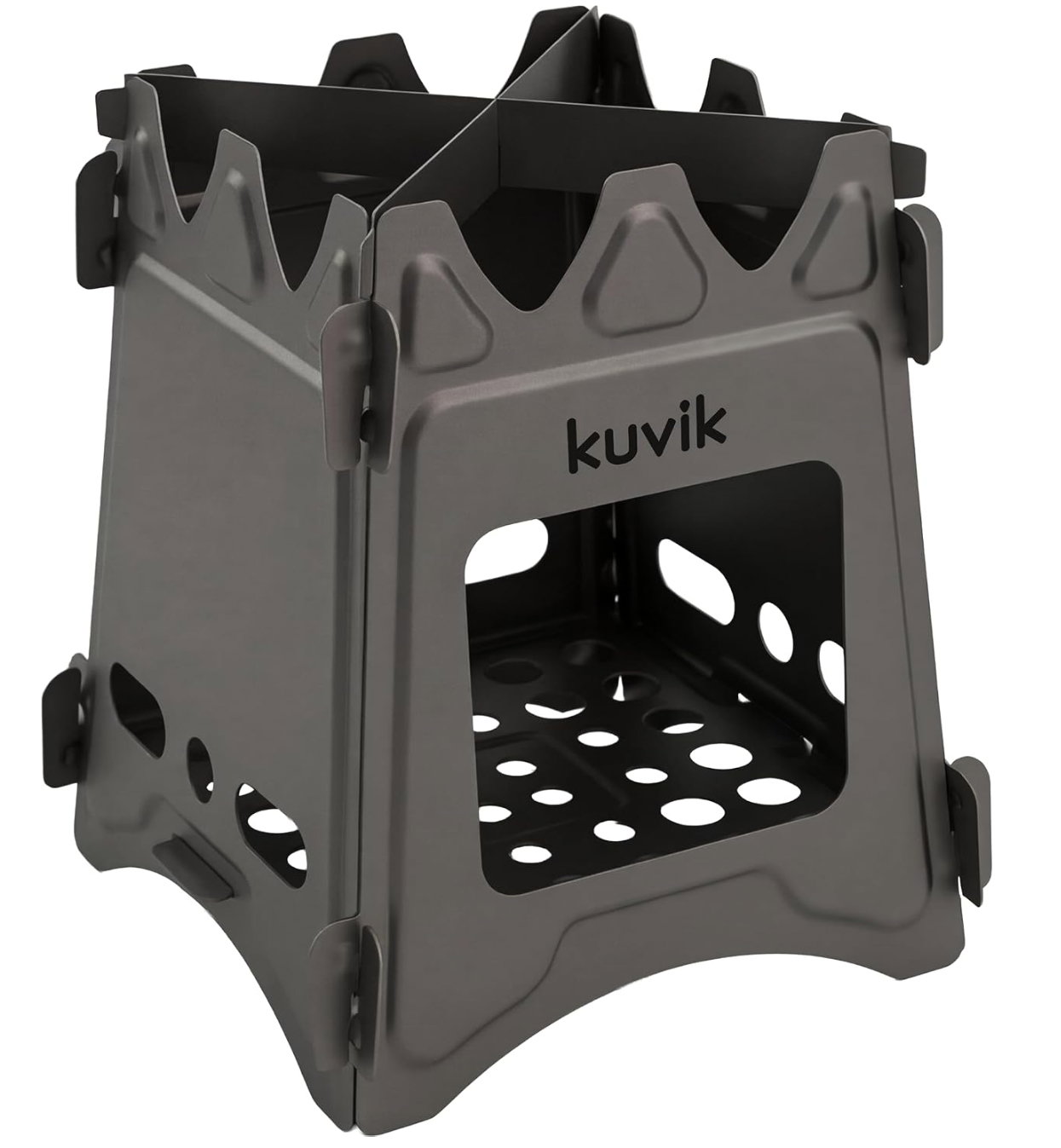
Most backpackers have never seriously considered using a wood stove - at least not here in the United States. I’m curious, though. Why wouldn’t we?
This Kuvik Titanium Wood Stove is $36 on Amazon and weighs 8oz.
It’s cheaper than some more popular wood stoves, like the SoloStove Lite at $60 or the TOAKS Titanium Small Collapsible Wood Burning Stove at $45.
There are other similar stoves on the market - some cheaper, some more expensive. The lightest wood stove I found cost around $8 and weighs about 4oz. But the drawback on these very minimalist stoves is that they require more tending to keep a fire going because they are so small. And they're less effective in the wind.
So, what makes for a good wood stove? Here are the things I considered:
- It needed to be big enough to build and maintain a fire that would quickly boil my water. Small stoves require constant feeding and they don’t get as hot. But one that was too large would get too heavy.
- The top needed to fit my various-sized pots, ranging from 500-750ml.
- It needed to have ample airflow to keep a fire going and hot.
- But it also needed to be enclosed enough to function well in the wind and rain.
- I wanted something easy to assemble and easy to stow away.
- I needed the metal to cool down fast - preferably titanium, as aluminum and steel retain heat a lot longer.
- It needed to be comparable in weight to my other cook systems… which are very lightweight. So, again. Probably titanium.
- And I wanted one for under $40.
This Kuvik checked all my boxes. All the others I looked at seemed to lack at least one of these criteria.
Wood stoves are a bit old-school, I know. But some of the advantages that make them attractive are:
- They're less expensive than most other options, especially in the long term.
- Fuel can be found in abundance in almost every setting.
- In most cases, the only point of failure is your ability to start a fire. Most other systems, by contrast, have several points of failure.
- With fewer points of failure, abundant fuel sources, and minimal skill requirements, it could be the most reliable option for backpacking, except in severe weather conditions like multiple really wet days or high-wind days.
- It is lighter than most ultralight canister stove systems if you factor in a full can of isobutane fuel, plus the stove and maybe a windscreen.
- There’s a feeling of nostalgia and satisfaction in cooking a hot meal over a wood fire; who doesn’t like a warm campfire while camping?
- With this option, you don’t need to carry or resupply fuel.
There are some drawbacks:
- It takes time to gather fuel and tend a fire; you’ll want to gather and process plenty of wood before you start.
- Water takes longer to boil than with a canister stove system.
- You may also be in fire-restricted areas where this isn’t allowed.
- It also requires additional skill and practice in the rain. Yes, with the proper skill and training, you can make a fire in the rain.
- You may need to bring some meals that can be cold-soaked just in case the weather is too extreme.
- The stove tends to get dirty and sooty; you may need to wash your hands after you break it down. You may want to bring a rag to wipe it down, or wash off the soot in a creek. Another idea is to bring gloves to wear while handling the stove.
In a world increasingly focused on convenience, these drawbacks seem unattractive. But if we go out into the wild to do hard things, grow, get challenged, and learn new skills, I can easily turn these drawbacks into opportunities. However, I get that sometimes we just want a quick meal at the end of the day.
It can easily take 10 minutes to boil water with this kind of stove, maybe more depending on the condition and type of wood, the wind, and how much water we're boiling.
It’s a little fussy, like most old-school ways of doing things. But, like many old-school ways, it’s reliable. It takes us back to tried-and-true methods. It’s nostalgic; our grandfathers did it this way, and it's comforting to know some things last for generations.
So, stay curious, my friends, and try new things. You never know; maybe you’ll find something you like better. But whatever you do - keep on living like you want it.